
Walks are one of the highlights of a dog's day. They allow them to exercise, of course, but also to sniff, observe, explore and discover their surroundings. And for their owner, it is often simply an opportunity to get some fresh air and enjoy a relaxing moment together.
A several-hour hike in the countryside, a walk around the neighbourhood, a trip to the park, a weekend walk in the forest or a few days away on holiday... These are all opportunities to explore a different environment and enjoy a walk with your companion.
So, what do you really need to take with you? Collar or harness? Which leash should you choose? Should you bring water? Here are our tips for preparing for a walk with your dog without carrying unnecessary equipment and, above all, while keeping their needs in mind.
In this guide
- What equipment should you take on a walk with your dog?
- What should you pack for a long walk with your dog?
- In town, in the forest or by the water: adapting your walk to the environment
- Adapting your walk to the weather
- Make the most of walks to play and explore
- After the walk: a few useful checks
- Adventure with your dog starts with everyday life
For a twenty-minute walk around your neighbourhood, there is obviously no need to fill a backpack. However, as soon as you head out for longer or travel further from home, a few additional accessories can quickly become useful depending on the situation.
Collar or harness for walking your dog?
For a dog that walks comfortably on the leash without pulling significantly, a correctly fitted collar may be suitable for many walks. A collar is also practical for carrying an identification tag.
A dog harness may be preferable in other situations, particularly depending on how your dog walks on the leash, their body shape, sensitivity or the activity involved. The important thing is that it is correctly fitted and allows your dog to move comfortably.
If your dog pulls strongly, simply changing their collar or harness will not solve the problem. Progressive training on leash walking may be necessary, potentially with guidance and advice from a canine behaviourist.
Check the fit regularly
A harness or collar that fitted correctly a few months ago may no longer fit properly today, particularly for a growing puppy or following a change in weight.
👉 Find out more: how to choose a dog collar?
Which leash should you choose for walks with your dog?
The right leash depends largely on the environment in which you are walking.
For everyday walks in town or in busy areas, a standard, relatively short leash makes it easier to keep your dog close to you. A longer or multi-position leash provides greater freedom when the environment allows. It can be useful on a path or in a more open area while still keeping your dog attached.
At Waf & Co, we have chosen coated synthetic webbing for our dog leashes. It is waterproof and easy to clean, which is particularly useful when a walk ends with the leash having been dragged through a puddle or covered in mud. Our leashes are also two-tone and assembled in France. The colour combinations are naturally inspired by shades we love to see outdoors: khaki, brown, sky blue, orange, burgundy... An aesthetic choice, but one that does not change what matters most: a leash should above all be practical and suited to how it will be used.
👉 Discover Waf & Co dog leashes
Should you bring water on a walk?
For a short, familiar walk around your neighbourhood, carrying water is generally unnecessary if your dog can drink before and after the walk.
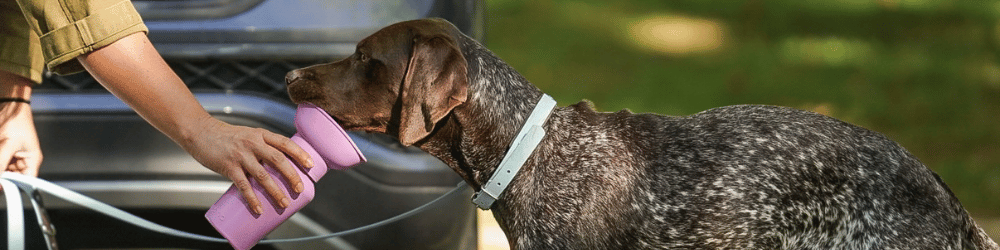
It becomes more important when the weather is hot, when you are heading out for a long time, during a journey or when you are going far enough that you will not have access to clean, fresh water. A bottle with a small bowl or a water bottle designed for dogs allows you to offer them a drink without carrying too much equipment.
Treats on walks: should you always take some?
Walks can sometimes be an opportunity to work on certain aspects of your dog's training. A few rewards in your pocket can therefore be very practical when working on recall, leash walking or simply when you want to reinforce a particular behaviour. A small treat pouch gives you quick access to them without finding pieces at the bottom of your jacket or bag. Choose rewards that are small enough and remember to take them into account as part of your dog's overall daily food allowance.
What should you pack for a long walk with your dog?
As your walk gets longer, and depending on the duration, weather and location, you may want to bring:
- water and something your dog can drink from;
- a few treats;
- dog waste bags;
- a leash suited to the environment;
- something to quickly wipe very dirty paws if you are getting back into the car afterwards;
- any treatments or equipment your dog personally needs.
What you pack should above all suit your outing. An hour in a park near home obviously does not require the same preparation as a full day away from home.
In town, in the forest or by the water: adapting your walk to the environment
Changing environments can add variety to your dog's walks, but it also means adapting certain habits.
Urban environments can be particularly stimulating: pavements, traffic, bicycles, other dogs, passers-by... A short leash makes it easier to keep your dog close, which is generally more practical and safer in busy areas. Also be mindful of any rubbish your dog may try to pick up.
Out in the countryside, it is often tempting to give your dog more freedom. However, this freedom should remain compatible with their recall, the environment and any rules that apply in the area where you are walking. Paths also come with their share of mud, vegetation and small creatures. When you return, a quick check of your dog's coat, ears and paws can make it easier to spot a tick, grass seed or minor injury.
Some dogs also love swimming. In this case, make sure the location is suitable and pay attention to any currents, access points for getting out of the water and your dog's level of fatigue. Once home, rinse your dog and their equipment with clean water if necessary, particularly after swimming in the sea.
Adapting your walk to the weather
In very hot weather, it is generally better to choose the coolest times of day and adapt the duration and intensity of the walk. Tarmac and some other surfaces can also become very hot and cause discomfort or even burns to your dog's paw pads. Bring water when necessary and watch for any unusual signs of fatigue or discomfort.
For most dogs, rain makes absolutely no difference to their desire to go outside. For their owners, coming home can be slightly less enjoyable. Waterproof, easy-to-clean equipment then becomes particularly useful. Keeping a towel near the entrance or a suitable mat in the car can also help avoid a few extra muddy paw prints. If your dog needs one, consider using a suitable waterproof dog coat.
In winter, some more sensitive dogs or dogs without an undercoat may need a suitable dog coat when heading outside.
Make the most of walks to play and explore
Regularly changing your route can enrich your dog's walks. New smells, new encounters... All these new stimuli provide valuable mental activity and enrichment for your dog! You can also occasionally bring a ball, frisbee or another suitable toy if the environment allows you to play safely. It may even be an opportunity to meet some new playmates!
An interesting walk does not necessarily have to be a long walk
Distance is not the only measure of a good walk. Exploring a new place, taking time to sniff or discovering a different environment can make an outing particularly enriching for your dog.
👉 Find out more: how to play with your dog?
After the walk: a few useful checks
Once you are home, a few moments are often enough to make sure everything is fine.
After a walk in the countryside, check for ticks and grass seeds, particularly during the warmer months. Also remove any mud, small pieces of vegetation or other dirt picked up during the walk. Remember to check your equipment from time to time as well. A leash, collar or harness showing significant wear or a damaged component should be replaced before it becomes a safety issue.
A bowl of fresh water, a comfortable dog bed and a little peace and quiet may be exactly what your dog wants after exercising.
Adventure with your dog starts with everyday life
At Waf & Co, we love the idea of the adventurous dog: one that happily and safely explores their surroundings alongside their owner. But being adventurous does not mean being reckless.
For a dog, adventure is often simply discovering a new path, running through leaves, swimming, sniffing the same patch of grass for ten minutes or coming home covered in mud. This is also the philosophy behind the equipment we select: useful accessories for real life with your dog, designed to accompany you on everyday walks as well as slightly more spontaneous adventures.
Because ultimately, the best walk is the one that suits your dog, their abilities and what they enjoy doing with you.