
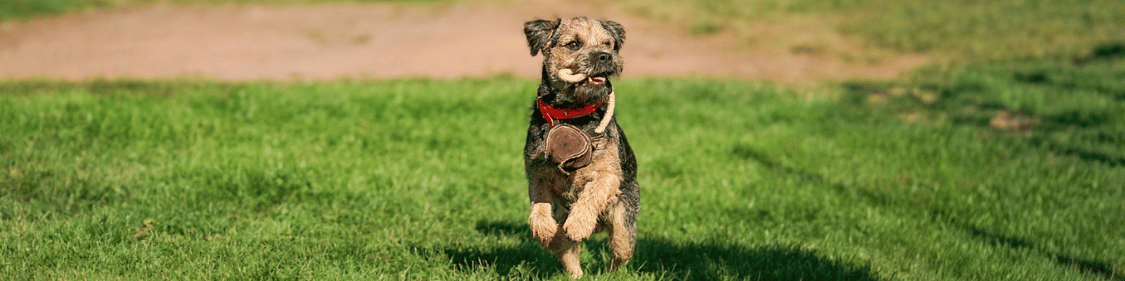
Playing with your dog is not simply a way to keep them occupied. Play contributes to their well-being by allowing them to move, think, explore, interact and express certain natural behaviours. It is also one of the simplest ways to share a positive moment together.
But not all dogs play in the same way. Some could chase a ball for hours, while others prefer searching for a hidden treat, tugging on a rope or quietly chewing a toy in the corner of the sofa.
There is therefore no single ideal game for every dog. What matters is finding activities that suit your dog, their preferences and their needs, while respecting their own pace.
In this guide
Why is play important for dogs?
Play can engage your dog in different ways: physically when they run or retrieve an object, mentally when they have to search or solve a small problem, and socially when they play with you or another dog.
In particular, it can:
- provide suitable physical activity;
- stimulate problem-solving, sense of smell and curiosity;
- add variety to their daily routine;
- provide opportunities to express certain natural behaviours;
- create enjoyable moments with your dog;
- strengthen the relationship between dog and owner.
However, play does not replace walks, opportunities to explore or rest. It is part of a balanced daily routine, alongside all these other needs.
Above all, play should remain enjoyable. A dog that turns their head away, moves away or simply shows no interest in the toy being offered should not be forced to participate.
Observe your dog
Watch what they naturally choose to do when you start a play session. Do they like chasing, searching, tugging, carrying, chewing or solving a small problem? Their preferences are often the best starting point when choosing toys.
What games can you play with your dog?
Balls, ropes, soft toys, stuffable toys, snuffle mats... There are plenty of options, but they do not all meet the same needs. It is useful to vary the experiences you offer your dog.
| Type of game | What it offers | Examples |
|---|---|---|
| Interactive play | Sharing an activity with your dog | Ball, rope, frisbee, tug toy |
| Enrichment game | Problem-solving, manipulating objects and staying occupied more calmly | Stuffable toy, treat dispenser, snuffle mat |
| Scent game | Using their sense of smell and searching | Hidden treats, snuffle mat, object searches |
| Throwing and retrieving game | Running, chasing and potentially retrieving | Ball, frisbee, throwing toy |
| Tug game | Grabbing, tugging and interacting with their owner | Rope, tug toy |
Interactive games: playing together
Throwing a ball, rolling a toy, gently tugging on a rope or playing with a frisbee are all activities in which you participate directly. These interactive games with your dog are particularly useful for sharing an activity together. They can also be incorporated into simple training exercises: waiting a few seconds before setting off again, retrieving an object or dropping it, for example.
👉 Discover our interactive dog toys
However, avoid turning every ball game into a frantic succession of throws. For a dog that quickly becomes overexcited, a few throws interspersed with breaks, searching activities or calmer games may be more suitable than a long succession of sprints.
Enrichment games: problem-solving and staying occupied in a different way
Not every game needs to be highly physical. Dog enrichment toys generally provide an activity that requires greater concentration: searching for food, manipulating an object, licking or working out how to access a reward. They offer a different type of activity, particularly through treat-dispensing toys, snuffle mats and certain stuffable toys.
👉 Discover our dog enrichment toys
Start simple: a game that is too difficult can cause frustration rather than enjoyment. Your dog should be able to gradually understand how to obtain what they are looking for.
Scent and searching games: let them use their nose
Dogs discover much of their environment through their sense of smell. You can therefore play with your dog without running or throwing anything.
Hide a few treats around a room, in a snuffle mat or in the garden and let your dog search for them. You can also hide their favourite toy or create small scent trails. These activities have the advantage of being easy to adapt: start with a few simple searches, then gradually make the hiding places more challenging if your dog enjoys the activity.
Throwing and retrieving games
Balls, frisbees and other throwing toys are among the classics. They allow your dog to run, chase and sometimes retrieve an object.
But once again, the quality of the game matters more than the number of throws. Adapt the distance, terrain and frequency to your dog's age, physical condition and body shape. However, this type of game can stimulate and increase the predatory or chasing instinct in some dogs. It is important to ensure that it does not become counterproductive for your companion.
For a growing puppy, a senior dog or a dog with particular physical sensitivities, acceleration, jumping and sudden changes of direction require greater caution.
Tugging, grabbing and shaking: tug games
Some dogs love grabbing a rope or toy and tugging on it with their owner. Tug games do not need to become a battle of strength. It is important to let your dog win, resume the game, teach them to let go and then start again.
Simply choose a toy that is long enough to keep your hands away from your dog's mouth and adapt the intensity of the movements to your dog.
Plush dog toys to carry
A soft toy does not necessarily have to be thrown or destroyed. Some dogs simply enjoy carrying their toy, gently chewing it or sleeping with it. Others will immediately try to remove the stuffing or squeaker. Observing how your dog uses their toys is therefore essential: the same product can be a comfort toy for one dog and something to tear apart within minutes for another.
👉 Discover our plush toys for dogs
How to choose a suitable toy for your dog
Size and breed provide some guidance, but they are not enough. Two dogs of the same size can have completely different ways of playing.
Before choosing, ask yourself:
- how does my dog like to play?
- do they chew their toys vigorously?
- do they prefer running, searching, tugging or problem-solving?
- do they play alone or mainly seek interaction?
- do they destroy objects quickly?
- do they have any particular needs related to their age or physical condition?
The size of the toy should also be suitable for your dog's mouth so that they can grip it properly without the risk of swallowing it.
At Waf & Co, we therefore prefer to choose according to the individual dog and intended use. A highly durable toy is of little benefit to a dog that simply wants to carry a soft toy, just as a lightweight soft toy will not be the most suitable choice for a dog that systematically tries to destroy its toys.
Playing with your dog while respecting their well-being
A good game is not simply one that keeps your dog occupied for a long time or tires them out. Above all, it is an activity in which your dog participates willingly and enjoys themselves.
Let your dog choose too
Offer several types of activities and observe their preferences. Does your dog abandon a toy after two minutes? This is not necessarily a problem. They may prefer another activity or simply no longer feel like playing. Conversely, a very enthusiastic dog may need your help taking breaks if they find it difficult to stop a highly exciting activity on their own.
Vary activities rather than trying to exhaust your dog
The aim of play is not necessarily to “tire out” your dog as much as possible.
Alternating physical activity, searching, problem-solving and calmer moments provides a variety of experiences. Rotating the toys available can also help renew their appeal without constantly buying new ones.
There is no need to put out every toy at once
You can leave a few toys available and rotate them regularly. A toy that has been put away for a while may become interesting again when it reappears. This is also an opportunity to adapt activities to what your dog feels like doing at the time: exercising, searching, interacting or simply playing more calmly.
Respect rest periods
Dogs also need time to do nothing. There is therefore no need to fill every free moment with an activity. After a walk or play session, give your dog the opportunity to return to a comfortable place and sleep peacefully.
A few rules for playing safely with your dog
No toy is completely indestructible. Its durability depends on the material, but also on the strength of your dog's jaws and, above all, how each dog uses it. Check its condition regularly before and after play. A toy that is badly damaged, torn or has parts that could be swallowed should be removed.
Good habits when using dog toys
Always choose a toy that is appropriately sized for your dog, supervise the first few uses and check its condition regularly. Remove it if pieces begin to come loose or if it becomes damaged enough to present a risk of ingestion. A toy that is suitable for one dog is not necessarily suitable for another: the way they play matters just as much as their size.
If you have several dogs, also observe their interactions. A highly sought-after toy can create tension, and not all dogs enjoy sharing their resources.
What games can you play with a puppy?
Play plays an important role in a puppy's development and discoveries, but their body is still growing.
Choose short, varied sessions with toys suited to their size and teeth. Simple searching games, toys to manipulate, short interactive games and scent-based activities can provide stimulation without involving excessive physical effort. Chew toys can also be a very good option to help relieve teething discomfort.
Games involving lots of jumping, acceleration or sudden changes of direction should remain appropriate for their stage of growth. This is also a good time to teach them that play can start, stop and resume without conflict: exchanging a toy, letting go on request and waiting for a few seconds can all be taught gradually and positively.
Adapting play to each stage of your dog's life
A dog's preferences can change over time. A puppy that wanted to chase everything that moved may become an adult that loves searching games, then a senior dog that prefers calmer activities. Getting older does not necessarily mean stopping play: often, you simply need to adapt the intensity, duration and type of activity. Ultimately, playing well with your dog is above all about knowing how to observe them. What they choose, what excites them, what frustrates them and what helps them settle down all provide valuable clues about the activities that suit them.
This is also our approach at Waf & Co: selecting useful toys that are practical and suited to different uses, while keeping your dog's well-being at the heart of our choices. Because beyond the toy itself, what really matters is what your dog enjoys doing with it.