
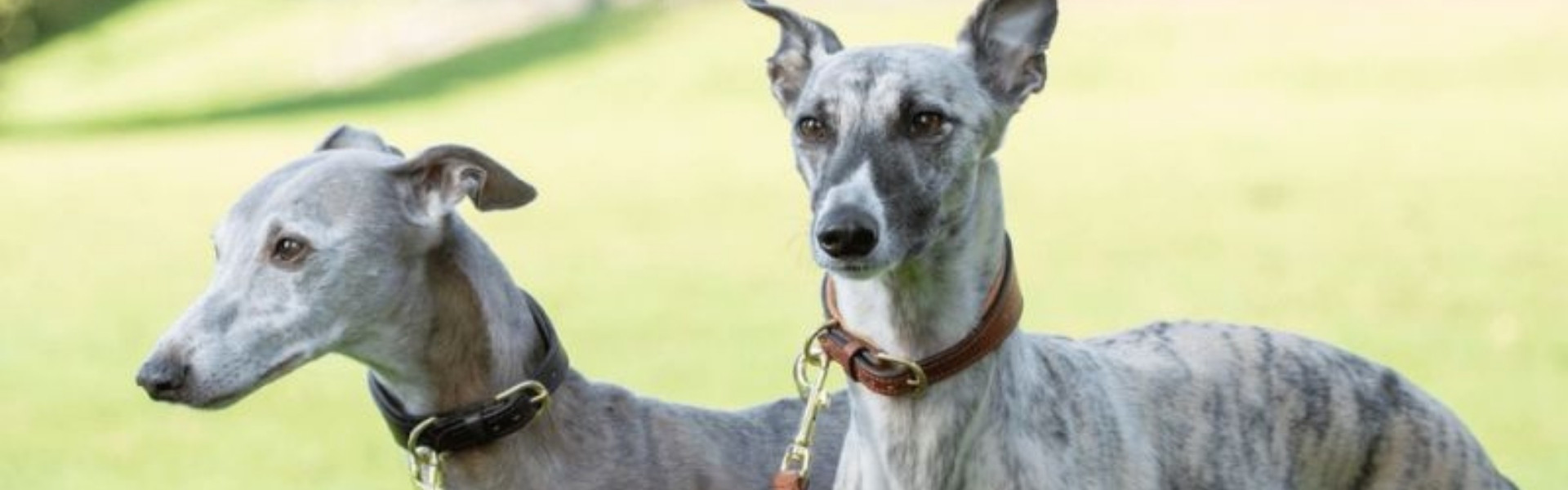
From our background as experts in the equestrian world, we learned a fundamental lesson: you do not equip a powerful draft horse the same way you would a thoroughbred with thin, highly reactive skin. Tack must always disappear to serve the animal's anatomy. At Waf & Co, we apply this exact same rigor to our entire range of dog collars, especially for breeds with distinct morphological sensitivities.
A sighthound with a long, fragile neck, a bulldog with short airways, or a tiny chihuahua cannot wear a standard collar. Ill-fitting equipment on these dogs does not just cause discomfort: it can lead to severe physical injuries. If you have already read our ultimate expert guide to choosing the right dog collar, you know that throat pressure is a critical concern. In this specialized guide, we will delve deeper into the specific needs of sensitive necks to help you find the ideal equipment.
In this guide
- 1. The biomechanics of sensitive necks: understanding fragility
- 2. Sighthounds and long necks: ergonomics against leverage
- 3. Bulldogs and brachycephalic breeds: safeguarding the respiratory system
- 4. Chihuahuas and tiny breeds: hunting down dead weight
- 5. Comparison table: which collar for which morphology?
1. The biomechanics of sensitive necks: understanding fragility
On a hardy breed, the neck is a muscular cylinder capable of absorbing moderate tension. However, for certain breeds selected for speed, small size, or cranial structure, this area becomes a high-risk vascular and cutaneous zone.
A total lack of undercoat and very thin skin (typical of sighthounds) leaves the epidermis directly vulnerable to chafing. Without appropriate padding, repeated friction destroys the guard hairs and creates painful skin sores. More seriously, the proximity of the jugular veins and the thyroid gland means that poorly distributed pressure can disrupt blood flow to the brain or inflame the endocrine system.
Finally, in miniature dogs, the structure of the trachea is so delicate that a single sharp jerk can cause the cartilaginous rings to collapse, leading to lifelong respiratory difficulties. Understanding these specific vulnerabilities is the very first step toward choosing respectful equipment.
2. Sighthounds and long necks: ergonomics against leverage
Whippets, greyhounds, and galgos possess a unique anatomical conformation: a very long, slender neck paired with an incredibly narrow head, which is often narrower than the neck itself. This specific shape presents two major technical challenges: the risk of escaping when backing up and the severe leverage effect exerted on the cervical vertebrae.
If you use a classic, straight collar, a sighthound can easily slip out of it by simply backing away in panic. Furthermore, the slenderness of their neck concentrates any pulling force onto too small an area, which can pinch the cervical nerves.
The technical answer lies in the traditional "fishtail" or flared shape. This historical design provides a wide surface area at the front of the throat to dissipate pressure, while tapering down behind the ears to prevent the collar from slipping over the head. The Shires sighthound padded leather collar perfectly meets this requirement, featuring an incredibly soft internal padding that protects the delicate skin of these canine athletes. For owners seeking a traditional look without compromising on comfort, the Shires sighthound British tweed collar combines timeless fabric elegance with the anatomical cut vital to their well-being.
3. Bulldogs and brachycephalic breeds: safeguarding the respiratory system
Flat-faced breeds naturally have a compromised upper respiratory architecture (stenotic nares, elongated soft palate). The slightest crushing of the throat instantly restricts their oxygen intake and spikes their heart rate. This is particularly the case for breeds such as the French Bulldog, the Shih Tzu or the Sharpei.
A collar must never be used as a training tool for pulling if the dog has not yet mastered loose-leash walking. However, for holding ID tags or during calm outings, it must be wide and flat. Round collars are strictly to be avoided because they sink into the folds of their thick necks and concentrate force directly on the trachea. A flat model made of supple, high-quality fabric or heavily oiled leather will distribute forces across the entire neck structure without ever creating a focal point of compression on the airways.
4. Chihuahuas and tiny breeds: hunting down dead weight
For very small dogs, the weight of the equipment is the primary enemy of their vertebrae. A collar that feels weightless to us can represent a significant percentage of the total body weight of a two-kilogram animal. Translated to human scales, this would feel like wearing a heavy chain at all times, causing continuous muscle strain and severe neck tension.
When browsing our selection of small dog collars, your absolute priority must be the weight of the hardware. Heavy steel buckles or thick brass rings must be discarded in favor of lightweight alloys or high-quality composite buckles. For the most miniature profiles, look specifically at chihuahua dog collars tailored to their delicate frame. Models like the Shires fine rope collar, with its narrow diameter and airy design, are excellent options: they easily blend into the background, ensuring daily safety without ever weighing down their natural head carriage.
5. Comparison table: which collar for which morphology?
| Morphology | Main fragility | Required shape | Ideal material |
|---|---|---|---|
| Long necks (sighthounds) | Slipping out backwards, cervical leverage, thin skin. | Flared (wide at the front, narrow behind the ears). | supple padded leather or lined tweed. |
| Brachycephalic (bulldogs) | Tracheal sensitivity, upper airway obstruction. | Wide, flat, distributing pressure without choking. | Lined flat fabric or highly supple leather. |
| Miniatures (chihuahuas) | High risk of tracheal collapse, neck muscle fatigue. | Narrow (1 to 1.5 cm) and extremely lightweight. | Fine rope or ultra-lightweight fabric. |
This secondary guide is part of our comprehensive approach to prevention. To go further in protecting your companion, we invite you to consult our ultimate expert guide to choosing the right dog collar. If you have any morphological doubts, our team of experts remains at your entire disposal to guide you.